

Two parts are plated, but one fails faster. Why? The difference often isn’t the chemistry, but the current density (CD). Current density is the electrical current applied per unit area of the part being plated. It is calculated using the formula:
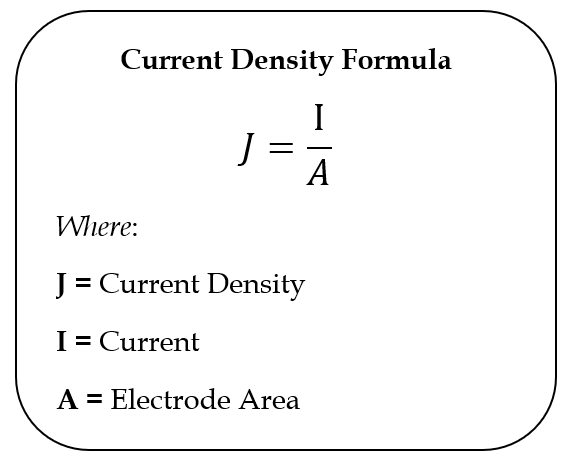
Accurate calculation of current density is important to ensure quality plating. Knowing the proper cathode current density to use makes the hard chrome plating production run smoothly. Current Density must be precisely controlled because it will greatly affect the physical structure, hardness, and performance of the hard chrome deposit. Correct current density will result in a fine, uniform and dense deposit structure on rod or metal.
In standard Chromic acid / sulfate processes, which are widely used in industrial components, typically the current density is in the 1.5 to 2.0 amps per square inch (144 to 216 amp / square foot). The typical deposit rates are in the range of 0.0005” to 0.0006” per hour (12.5-15 µm).
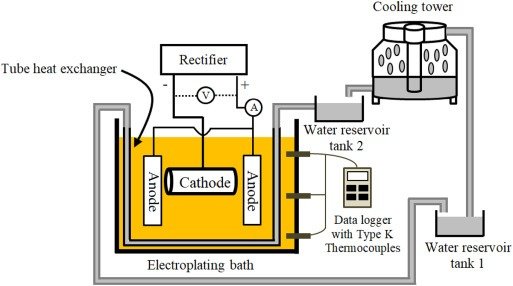
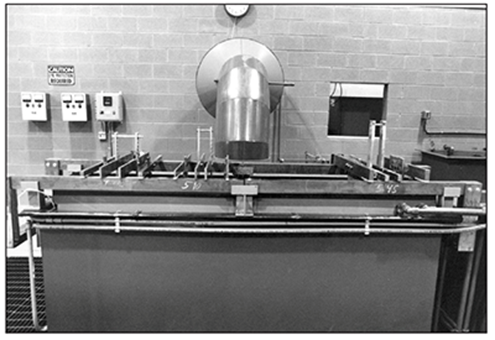
Components of Hard Chrome Electroplating
The Dangers of Inconsistent or Incorrect Current Density
There is a serious impact if there is an inconsistent or incorrect current density. There are different effects when the current density is too high or too low.
Low Current Density Zones
It will produce a “milky,” “cloudy,” or “dull gray” appearance. These areas are not deposited efficiently or correctly. Therefore, it lacks hardness and later on those areas will be the first to wear down. If you have seen these signs in your rod even if it’s newly plated, eventually your components will malfunction.
High Current Density Zones
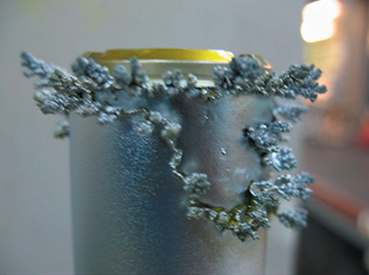
The effects of High Current Density zones are opposite of the problem found in low current density zones, but both have negative effects on the quality and lifespan of the hard chrome plating. It will result in a rough deposit instead of a bright metallic finish. This deposit is weak, brittle and has a very poor adhesion. Moreover, high current density zones will also produce thicker layers which are often like a “bumpy” or “crystalline” deposit. The “bumpy” or “nodular” deposits are difficult and costly to grind during the post-plating process. Furthermore, the high internal stress in these areas significantly reduces the coating’s corrosion resistance.
Inconsistent or incorrect current density results in uneven thickness and compromised structural integrity of your component. This is why precise current density is very important in hard chrome plating.
How SJD Engineering Achieves Optimal Current Density
In order to achieve optimal current density in hard chrome plating, it must be precisely controlled through adjusting amperage, temperature and bath chemistry simultaneously. SJD Engineering is an expert in this field, utilising advanced fixturing and shielding to ensure uniform plating thickness across metal surfaces even on the most complex geometries.
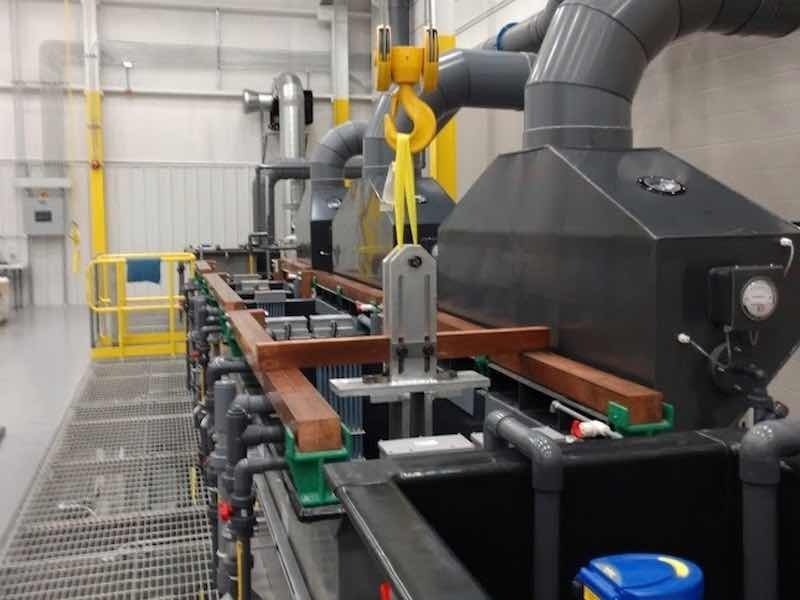
SJD Engineering achieve this by systematically integrating specialised components:
Internal or conforming anodes – to maintain a constant distance to the complex cathodes surface and direct current into bores, internal corners or deep grooves.
Conforming shields or non-conductive barriers – are used to intentionally block and redistribute current, reducing the concentration on high-current-density features like sharp edges.
Auxiliary electrode – a conductive anode that is placed in the plating tank near areas of the metal component in low current density areas. It has an independent power supply to easily control the current to ensure the correct plating rate, especially to the areas that are difficult to reach. It guarantees that all areas in the plating bath receive sufficient current to meet the minimum required thickness specification.
Thief electrode – a conductive cathode that is placed near areas of the workpiece with excessive current or with the high-current-density areas. Its main function is to siphon off excess current to prevent excessive plating and to achieve thickness uniformity.
Why This Matters to Your Business
In the field of industrial hard chrome, the ability to precisely control Current Density is the ultimate measure of quality. Partnering with a specialist who has mastered current density control is not just a technical preference—it is a critical business decision.
The Impact of Current Density
Superior Quality: Precise control prevents peeling and cracking by optimising adhesion and crystal structure.
Uniformity: The quality of the finish is heavily dependent on how the part is positioned or the process called jigging. Experts in jigging will ensure even coating on complex shapes, holes, and edges and to avoid thick spots and burnt.
Engineered Performance: Through advanced pulsing and process control, it will maximize hardness and minimize internal stress.
It matters to your business because precision equals performance. Superior quality, guaranteed hardness, and longer-lasting components reduces downtime for your WA business operation.